Damaged or Recalled Battery Devices and Air Travel: Read the FAA Limit Before Packing
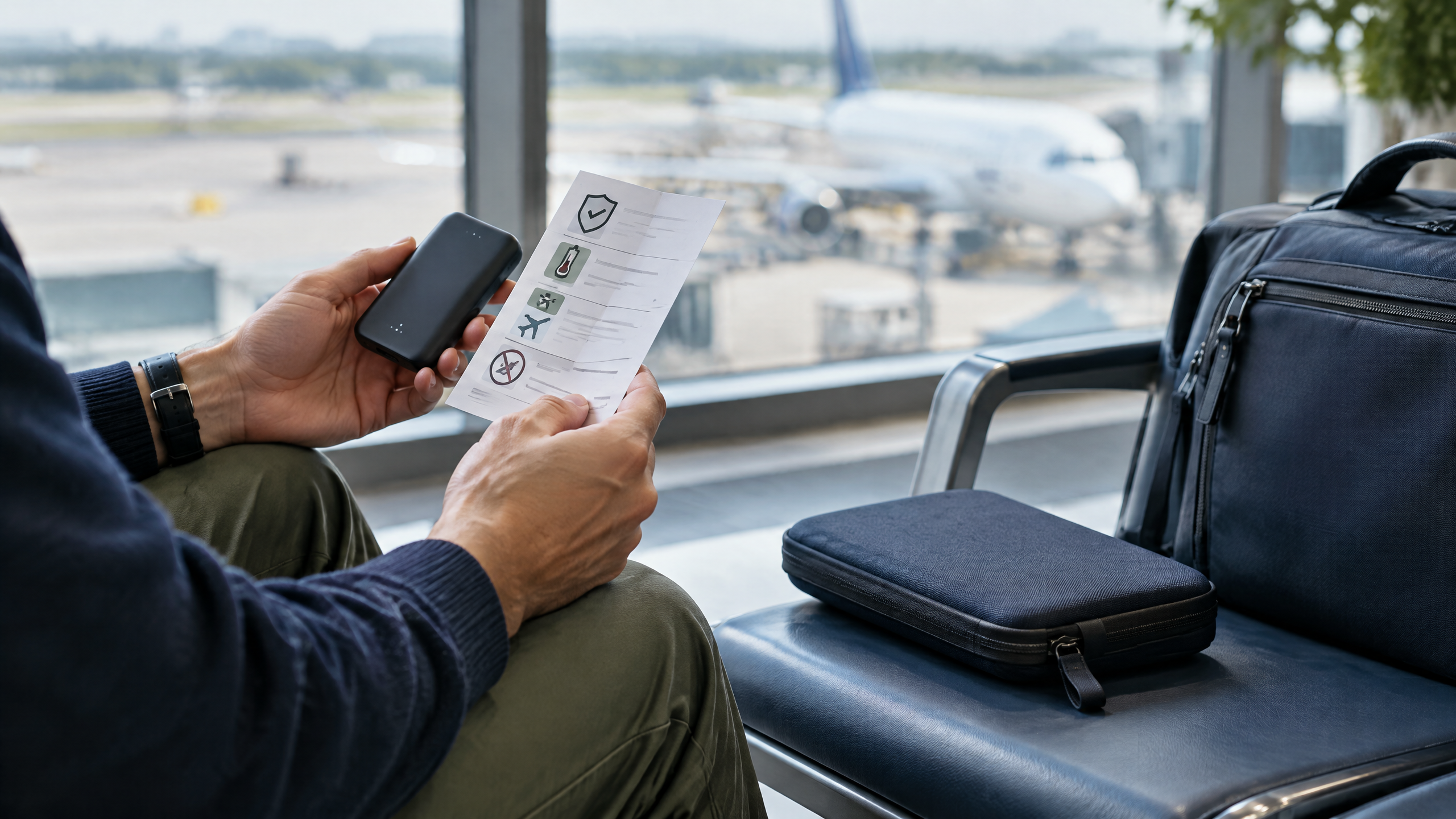
A 2026 adult travel explainer on the FAA boundary for damaged or recalled battery-powered devices and the separate questions travelers should verify before departure.
Carry-on is not an automatic answer for every battery device
Travel guidance often begins with the rule that electronic smoking devices and spare batteries belong in the cabin. That is not the end of the decision. FAA states that damaged or recalled batteries and battery-powered devices likely to create sparks or generate a dangerous evolution of heat must not be carried aboard an aircraft in either carry-on or checked baggage, unless the damaged or recalled battery has been removed or otherwise made safe.
Check the product’s actual recall and condition before travel
Before packing, check the manufacturer’s information and relevant public recall sources for the exact product or battery. Do not assume that a similar-looking device, a general social-media report, or a retailer comment determines recall status. FAA directs travelers to the Consumer Product Safety Commission, manufacturer, or vendor website for recall information. A recall notice can include instructions that are specific to a product, and an airline may issue additional guidance.
Do not turn the travel page into a repair procedure
This page does not explain how to remove a battery or make a damaged device safe. Those actions can depend on the product design, the manufacturer’s instructions, and the actual condition of the device. If the relevant official information does not clearly say the device is safe to transport, do not infer permission from a cabin-bag rule. Confirm the carrier’s current policy and use the manufacturer or relevant authority for product-specific instructions.
Separate the pre-flight question from an in-flight event
FAA says passengers should notify flight crew immediately if a lithium battery or portable electronic device is overheating, expanding, smoking, or burning. This article does not offer a substitute emergency response procedure. The useful pre-flight task is to avoid bringing an item that falls under the FAA restriction and to review official product and carrier information before reaching the airport.
Other battery rules still apply to eligible items
For items that are eligible to travel, FAA says spare lithium batteries and power banks must be carried in the cabin and protected from short circuit. Airlines can impose stricter quantity and watt-hour limits. For the distinct situation in which a cabin bag is gate-checked, see https://neven.bar/en/blog/gate-check-vape-device-spare-battery-2026. For general travel planning, see https://neven.bar/en/blog/flying-with-vape-policy-check-2026.
Official source and review date
This article was reviewed on October 19, 2026. Primary source: FAA PackSafe, “Lithium Batteries” https://www.faa.gov/hazmat/packsafe/lithium-batteries