Flying With a Vape in 2026: A Carry-On Planning Checklist
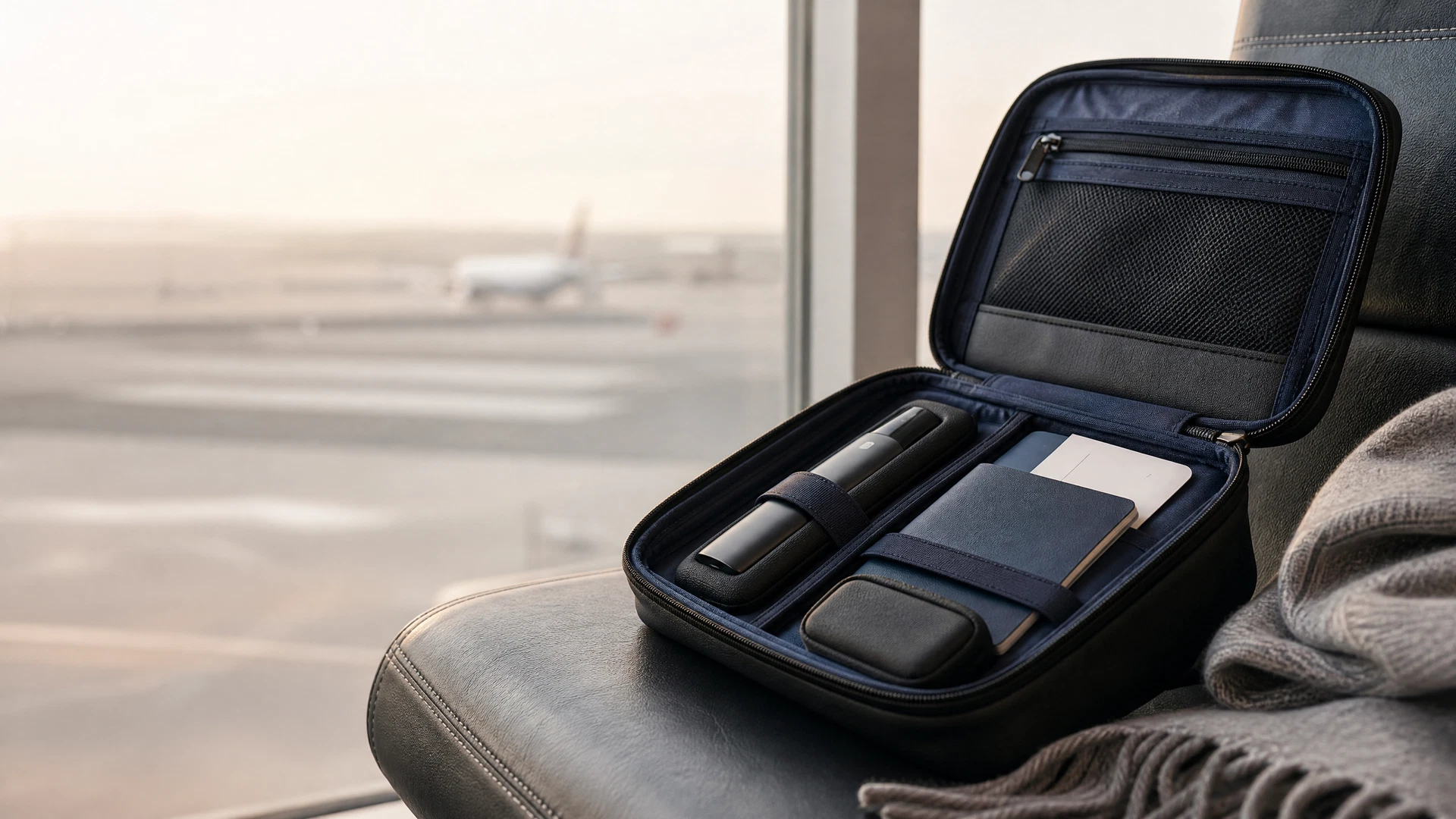
Travel rules are not an afterthought. This adult-only checklist explains why device placement, accidental-activation protection and airline-specific checks belong in every trip plan.
Flying with a vape starts with planning, not packing at the last minute. Rules can differ by airline, airport, route and destination, so an adult traveller should treat every trip as a fresh check rather than relying on a previous flight. The Federal Aviation Administration’s current PackSafe guidance is a useful U.S. reference point: battery-powered electronic smoking devices carried by passengers or crew must be kept on the person or in carry-on baggage. That is not a global travel permission; it is a reason to check the airline and destination rules before leaving home.
Put the device in the carry-on plan
For flights governed by the FAA framework, an electronic smoking device belongs on the person or in carry-on baggage, not in checked baggage. Build that decision into the packing list early. A protective case helps keep the device separate from loose items that could press a button or damage the body. If a bag is gate-checked, the traveller should know where the device is and be ready to remove it if required. The practical lesson is simple: do not let a battery-powered item disappear into luggage you cannot access.
Prevent accidental activation
The FAA requires effective measures to prevent the heating element from activating accidentally during transport. Depending on the design, that can include a protective case, a protective cover, a safety latch or lock, or a device feature that requires deliberate power-on before activation. The correct option depends on the specific model. Do not invent a workaround or modify the device for travel; use the protective measures described in the device instructions and ensure the device is fully secured before entering the airport.
Handle spare batteries separately and carefully
Spare lithium batteries also belong on the person or in carry-on baggage under the FAA guidance and should be individually protected against short circuits. The agency lists options such as original retail packaging, terminal protection, a battery case or a protective pouch. A loose battery placed beside keys, coins or other metal objects is the opposite of a travel plan. If a traveller is unsure whether a battery is spare, built in or removable, the device instructions and airline support channel are more reliable than assumptions.
Do not plan to recharge in the cabin
FAA guidance says recharging batteries and these devices on board the aircraft is not permitted. That makes pre-trip preparation more useful than searching for a cabin power source. Check the device before leaving, carry it safely and respect the airline’s instructions throughout the journey. Do not confuse permission to carry a device with permission to use it or charge it during a flight. Cabin rules, local smoking restrictions and airport policies can impose additional limits.
Confirm the route, not only the airline
An airline rule is only one part of a vape travel checklist. Check transit locations and the final destination, especially for international trips. Local laws may restrict possession, importation or use even if the departure airport permits carriage. A well-organised adult traveller keeps the airline’s current guidance, destination information and model instructions available before the journey. If the answer remains unclear, do not rely on a social post or an old travel forum. Ask the airline and consult an official destination source.
The useful 2026 travel trend is careful preparation: carry the device where it is permitted, prevent accidental activation, protect spare batteries and verify every route. Those steps are designed to make a lawful trip more predictable, not to bypass airport, airline or destination restrictions.
Further reading: U.S. FAA, PackSafe - Electronic Cigarettes, Vaping Devices: https://www.faa.gov/hazmat/packsafe/e-cigarettes-vaping