When a Carry-On Is Gate-Checked: An Adult Vape and Spare-Battery Checklist
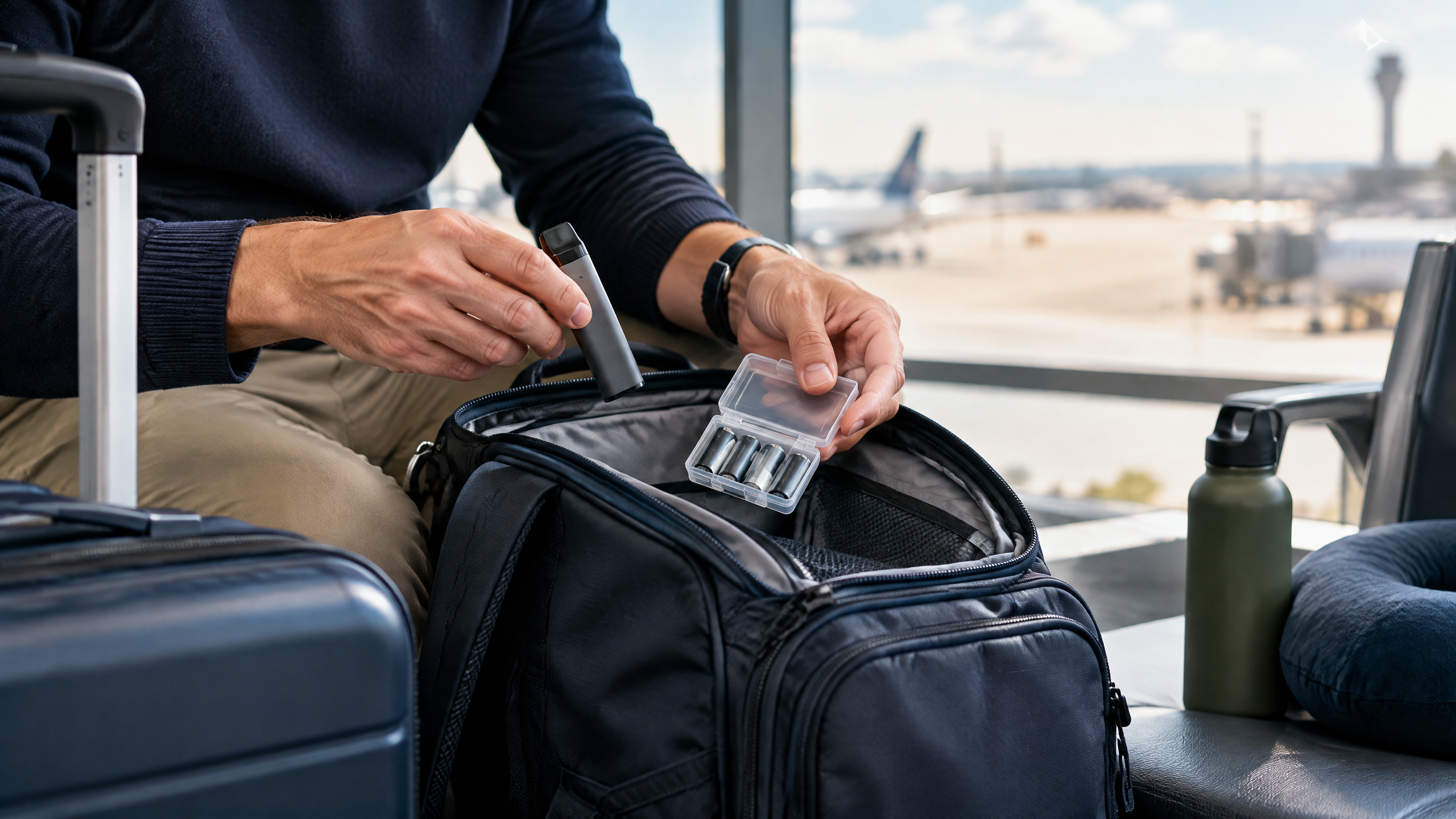
A focused 2026 travel checklist for adult passengers whose cabin bag is taken at the gate or planeside and who need to keep regulated devices and batteries in the cabin.
The gate-check situation changes what stays with you
A cabin bag can be accepted at the gate or planeside and then travel in the aircraft hold. That moment is different from ordinary carry-on packing. The U.S. Federal Aviation Administration (FAA) says electronic smoking devices carried by a passenger or crew member must be on the person or in carry-on baggage. FAA also says spare lithium batteries and power banks must remain with the passenger in the cabin when a carry-on bag is checked at the gate or planeside.
Before handing over the bag, remove the right items
Move the electronic smoking device into the cabin bag or personal item you keep with you. Remove all spare, uninstalled lithium batteries and power banks from the gate-checked bag. This is a useful point to pause and verify that the item in your hand is actually a spare battery rather than a battery installed in a device. FAA rules for the device and rules for a spare battery are related but are not identical.
Prevent accidental activation and short circuits
FAA requires effective measures to prevent accidental activation of an electronic smoking device’s heating element while it is transported. Examples listed by FAA include a protective case, a cover, safety latch, locking device, separating the battery from the heating coil, or device technology that prevents accidental activation. Spare battery terminals must be protected from contact with metal. FAA gives examples such as retail packaging, tape over terminals, a battery case, a protective sleeve, or an individual plastic bag or pouch.
Check capacity and onboard-use limits
For the FAA electronic-smoking-device guidance, each lithium-ion battery must not exceed 100 watt-hours and each lithium-metal battery must not exceed 2 grams of lithium content. FAA also says recharging these batteries and devices on board the aircraft is not permitted. A battery’s watt-hour rating may be marked on the battery; if a rating is unclear, do not guess. The airline may set its own limits on the number of devices that one passenger can carry for personal use.
Treat this as U.S. guidance, not a universal travel permission
Airlines, airports, departure points, transit points, and destinations can impose stricter or different rules. Confirm your actual carrier’s current requirements before packing. This article does not decide whether a particular product is legal to possess, sell, or use at a destination. For an earlier cabin-bag planning checklist, see https://neven.bar/en/blog/vape-carry-on-planning-questions-2026 and for destination-specific research steps see https://neven.bar/en/blog/vape-travel-destination-rule-check-2026.
Official sources and review date
This article was reviewed on October 19, 2026. Primary sources: FAA PackSafe, “Electronic Cigarettes, Vaping Devices” https://www.faa.gov/hazmat/packsafe/e-cigarettes-vaping and FAA PackSafe, “Lithium Batteries” https://www.faa.gov/hazmat/packsafe/lithium-batteries