How to Dispose of Vapes: A 2026 Decision Checklist
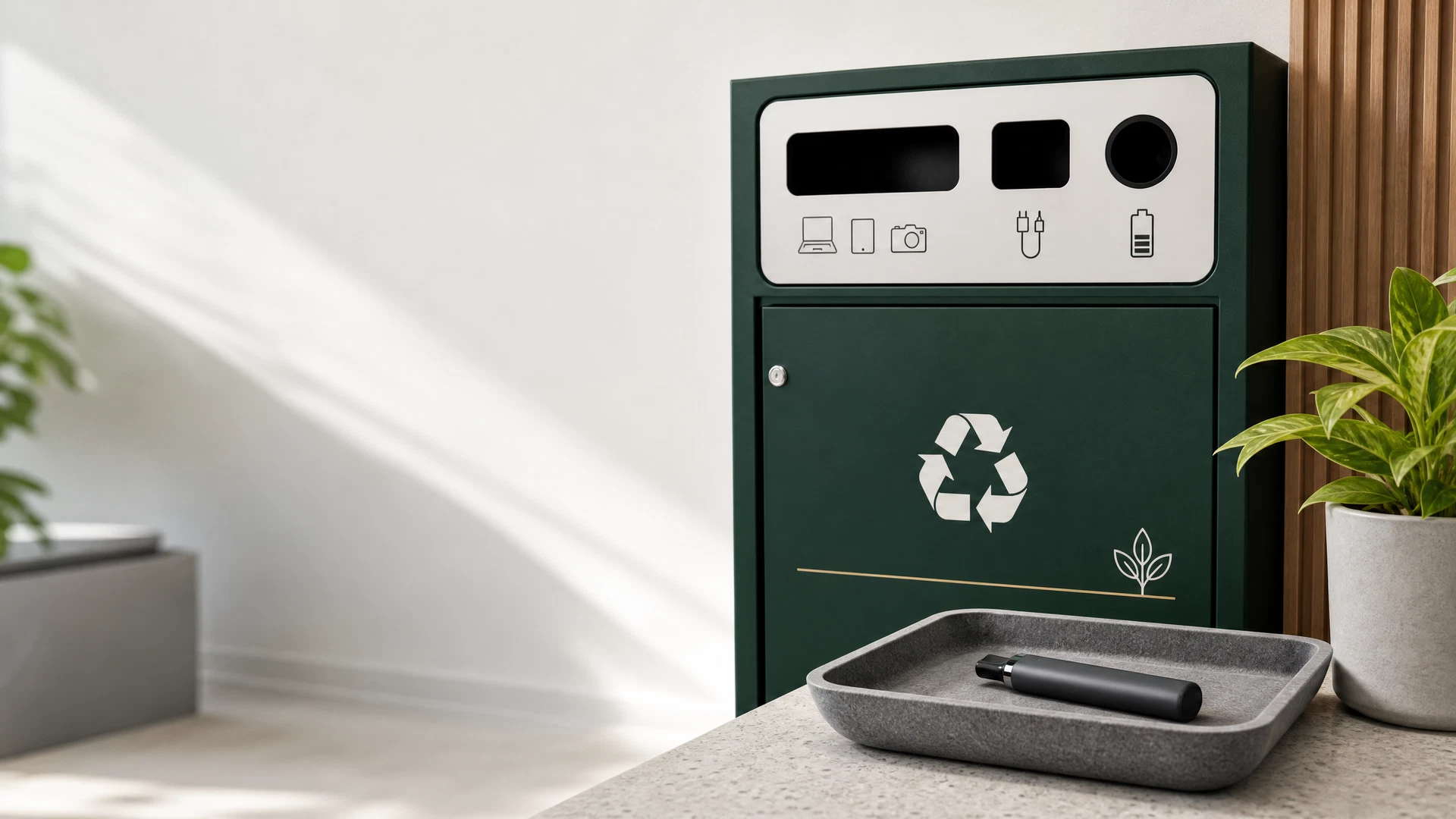
Disposal is an end-of-life decision, not a bin choice. This adult-focused guide explains why local hazardous-waste or approved collection channels should be checked first.
How to dispose of vapes is a question that deserves a more careful answer than put it in the nearest bin. An e-cigarette can contain nicotine liquid and a lithium battery, two components that make ordinary household disposal a poor default. The U.S. EPA advises individuals not to place e-cigarettes in household trash or recycling and instead to use a household hazardous-waste collection site. That advice is written for the United States, but the planning lesson applies broadly: start with a qualified local channel, not an assumption about a curbside bin.
First, identify the item without taking it apart
A used device may be disposable, rechargeable, refillable or damaged. It may look like a small consumer electronic product, but that appearance does not make it ordinary recycling. Do not open the device to remove a battery or pour out liquid unless a competent local programme and the manufacturer’s information expressly direct that process. When a product is not designed for user disassembly, an attempt to separate its parts can create more uncertainty, not less.
Do not use household trash or ordinary recycling as a fallback
The EPA explains that lithium batteries can be damaged in compactors and sorting equipment, creating fire risks during collection and processing. It also notes the environmental and worker risks associated with nicotine. That is why a vape disposal checklist should not end with a general recycling symbol. Municipal recycling systems accept different materials and may not be designed to receive electronic devices with batteries or residual liquid. A local rule or collection operator is the right source for the final answer.
Find the relevant local collection path
Search for household hazardous-waste collections, contact the local solid-waste agency or check whether an approved electronics or vape collection point accepts the device type. Before making a trip, verify what the site accepts, whether advance booking is needed, whether damaged items require special handling and whether residents must show proof of address. If a retailer offers a take-back point, ask about its acceptance rules rather than leaving an unfamiliar item at the counter. Clear acceptance rules protect staff and customers alike.
Treat damaged devices as a separate question
A device that is leaking, swollen, hot or visibly damaged should not be handled like routine waste. Do not use it, charge it or try to make it fit a collection container. Follow local emergency, waste-authority or manufacturer instructions that apply to the situation. The purpose of a disposal route is to move the item to a qualified process, not to turn an adult user into a repairer or hazardous-waste handler.
Make disposal part of product planning
Responsible end-of-life planning begins before a device is empty. Adult users can keep the local collection option in mind when choosing where to buy, retailers can publish clear return information, and distributors can keep product and collection guidance current. This does not mean that every programme works the same way. It means that the final step of using a battery-containing device deserves the same attention as the first.
The 2026 trend behind the keyword how to dispose of vapes is practical accountability. The best answer is specific to a location, clear about what is accepted and cautious about devices that are damaged or still contain liquid.
Further reading: U.S. EPA, How to Safely Dispose of E-Cigarettes: Information for Individuals: https://www.epa.gov/hw/how-safely-dispose-e-cigarettes-information-individuals