School and Small-Business Vape Waste: A 2026 Collection Workflow
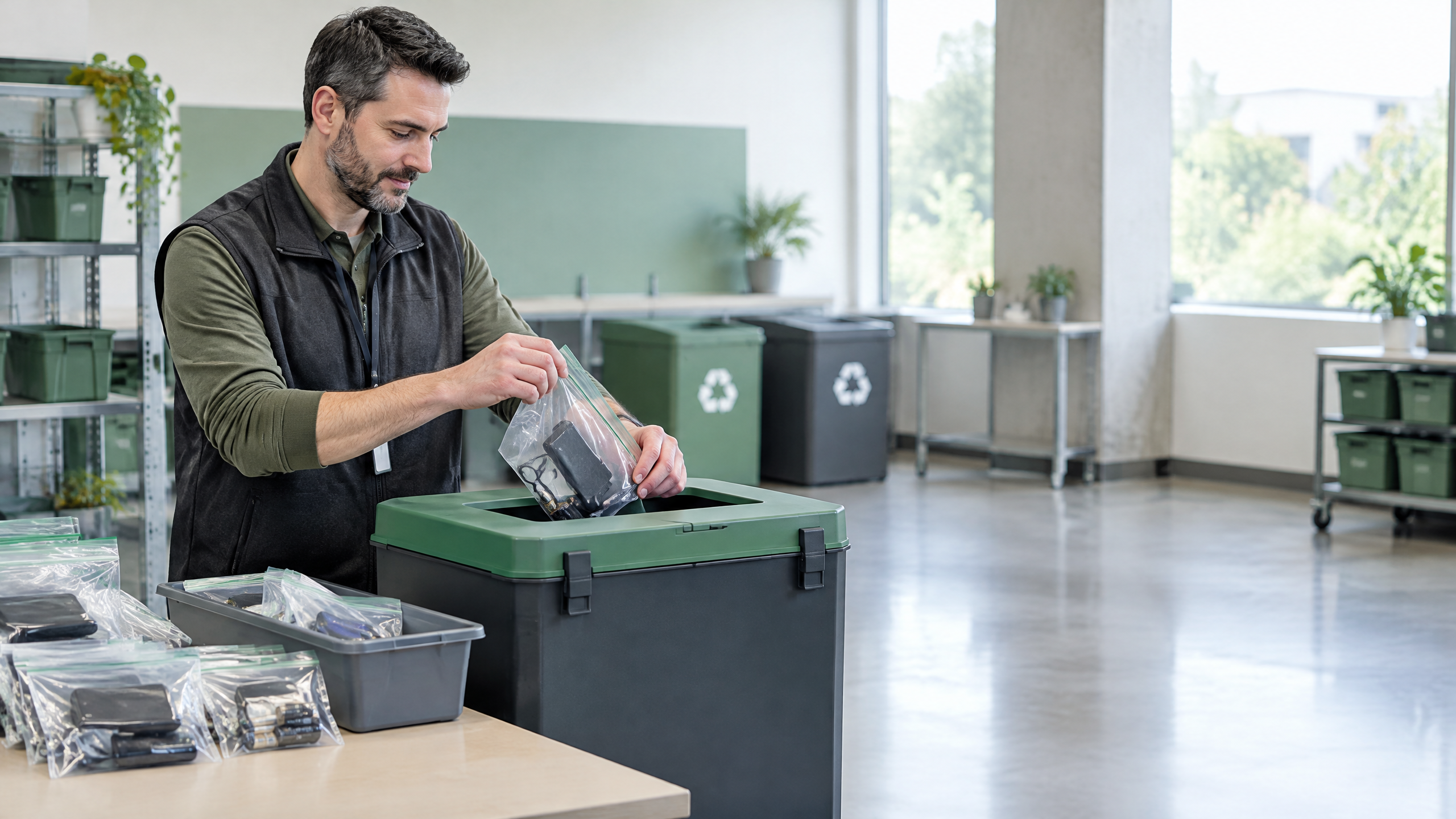
A practical U.S. information guide for adult staff who collect e-cigarettes or components at a school or small business before arranging proper disposal.
Scope: collected devices are not ordinary office waste
This adult-focused U.S. guide is for a school, workplace, or small business that has collected e-cigarettes or their components and needs to plan a safe handoff. It is not a consumer product guide and it is not legal advice. The U.S. Environmental Protection Agency (EPA) explains that e-cigarettes can contain both nicotine and lithium batteries. A collection decision therefore needs to account for liquid nicotine exposure and battery short-circuit or fire risk.
Start with a clear “do not” list
EPA says schools and businesses should not place e-cigarettes or components in trash or recycling bins. Do not pour e-liquid down a drain, rinse e-liquid out of a device, or take the items to Drug Enforcement Administration Take-Back Days. A staff-facing collection note should make these limits visible before a device is accepted, so a well-intended cleanup does not create a new handling problem.
Step one: separate and secure what was collected
For intact devices, EPA advises placing each e-cigarette in its own clear, sealed plastic bag. Individual loose lithium batteries should also be separated in clear, sealed bags, or their terminals can be taped to help prevent a short circuit. E-liquid vials, cartridges, and pods should be kept in a clear sealed bag; EPA notes that several of those liquid items can be placed together. If staff could contact e-liquid, EPA says chemical-resistant gloves such as nitrile or latex can help reduce skin exposure.
Step two: decide who owns the disposal decision
EPA says a school’s or business’s options depend on its Resource Conservation and Recovery Act generator category, the total hazardous waste it generates in a calendar month, and whether it is or contains a healthcare facility. Count all relevant hazardous waste, not only collected e-cigarettes. A local small-business collection program may be an option for some very small quantity generators, while other facilities may need a qualified hazardous-waste service. State rules and site-specific facts can change the right route.
Step three: create a simple handoff record
Keep a dated internal record of when items were accepted, how many sealed bags or containers are awaiting pickup, whether there are loose batteries or e-liquid components, and who will confirm the collection route. Store only what your approved local process permits, arrange regular off-site transfer, and do not let a temporary collection point become long-term storage. EPA specifically recommends regular off-site transfer to avoid accumulating acute hazardous waste.
Connect this workflow to local household guidance
This page is for institutions, not home disposal. For an adult household question, begin with the separate local-guidance checklist at https://neven.bar/en/blog/vape-household-hazardous-waste-guide-2026. For a retailer-facing battery-storage question, see https://neven.bar/en/blog/vape-battery-storage-questions-retailers-2026. In every case, confirm acceptance, transport instructions, and applicable local requirements directly with the relevant authority or service provider.
Official source and review date
This article was reviewed on October 19, 2026. Primary source: U.S. EPA, “How to Safely Dispose of E-Cigarettes: Information for Schools and Small Businesses” https://www.epa.gov/hw/how-safely-dispose-e-cigarettes-information-schools-and-small-businesses