UK Vape Retailer Take-Back: Why the Distributor Takeback Scheme Is Not the Route for Vape Sellers
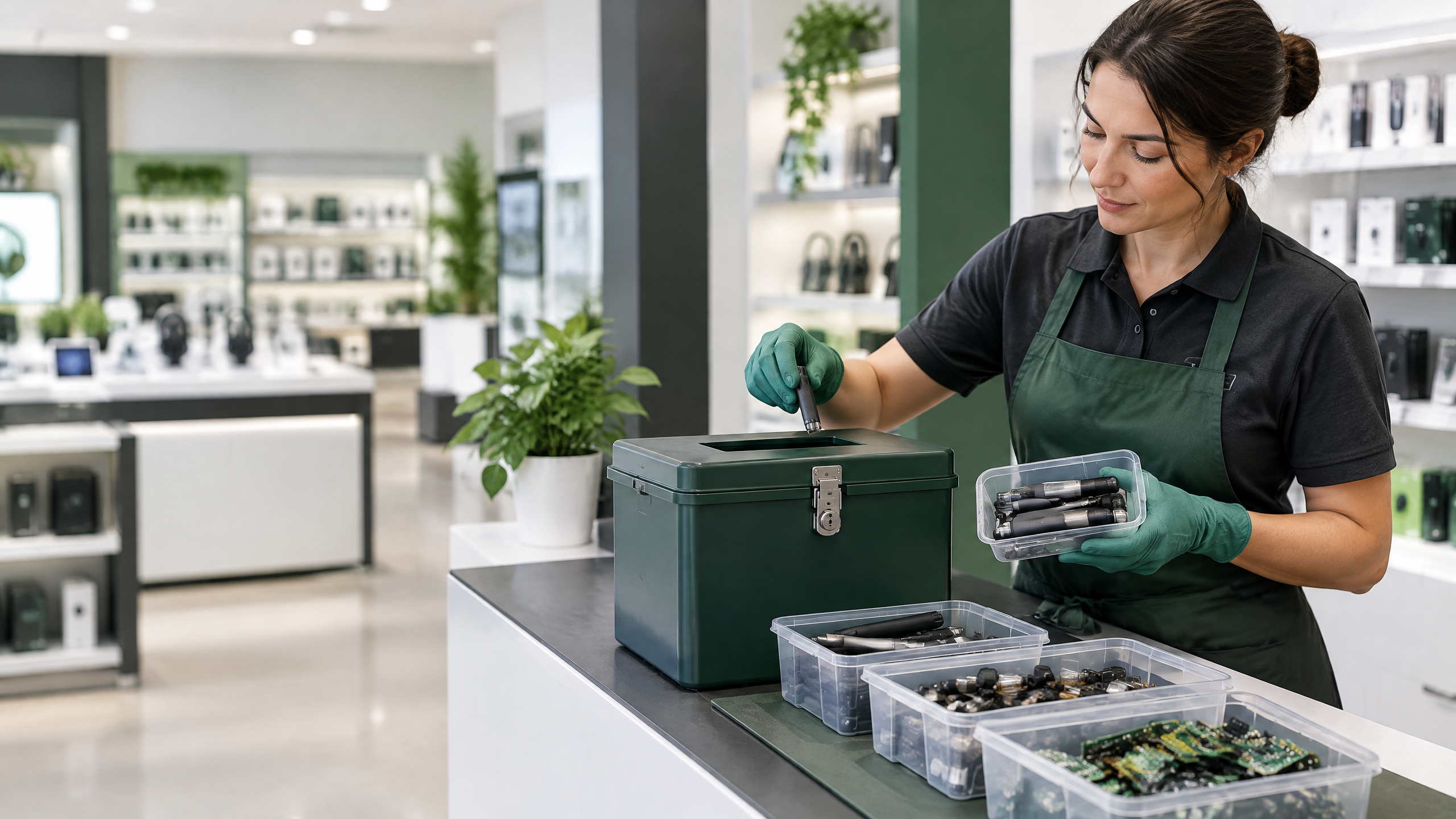
A 2026 adult retail explainer on UK vape take-back, returned pods and batteries, WEEE records, and the specific boundary around the Distributor Takeback Scheme.
A specific UK retail question, not a generic recycling claim
This adult-focused article concerns businesses that sell vapes in the United Kingdom, whether in a shop or online. It explains a narrow but important operational point: the UK government’s WEEE guidance says vape retailers are excluded from the Distributor Takeback Scheme (DTS). That does not remove the need to manage returned vape equipment. It means a vape seller should not treat DTS membership as the route for meeting vape-specific collection duties.
The take-back duty covers devices and returned parts
The UK government’s single-use-vapes guidance says that a distributor selling vapes must offer a take-back service. The service must accept vapes and vape parts returned by customers for recycling, including used pods, coils, and batteries. The guidance says this also includes single-use vapes returned after the single-use vape ban began on June 1, 2025. This page does not claim that every electrical-waste rule is identical; it focuses on the vape-specific obligation described by the government.
What the broader WEEE guidance adds
The WEEE guidance says distributors must offer free take-back on WEEE and accept WEEE returned by customers for like-for-like products, including where the sale happens in store, online, or by mail order. It also says distributors must keep a record of WEEE taken back for at least four years and provide customers with written information about the service and what they should do with their WEEE. Retailers selling all types of vapes have additional collection and recycling obligations.
Build a retailer workflow around safe collection
Use a clear route for accepting returned vapes and parts, provide the required customer information, and retain the required records. The single-use-vapes guidance says unsafe storage or improper disposal is a fire risk; it says vapes should go into vape bins only and should be collected regularly for recycling. Local arrangements, service-provider requirements, and the legal position of each business can differ, so a retailer should confirm its actual process before describing it to customers.
Keep unsellable stock separate from customer take-back
The same UK guidance says leftover single-use vape stock cannot be sold or supplied. It must be separated from other goods, labelled as unsellable, removed from a shop floor or online store, and sent through a registered vape recycling service. That stock-management issue is different from receiving used devices back from customers, even though both require safe collection and a lawful recycling route.
Related reading and official sources
For a general UK retail listing review, see https://neven.bar/en/blog/uk-single-use-vape-retail-listing-review-2026. For customer-facing collection information, see https://neven.bar/en/blog/uk-vape-recycling-customer-information-2026. This article was reviewed on October 19, 2026. Primary sources: UK Government, “Single-use vapes ban: information for businesses” https://www.gov.uk/guidance/single-use-vapes-ban and UK Government, “Regulations: Waste Electrical and Electronic Equipment (WEEE)” https://www.gov.uk/guidance/regulations-waste-electrical-and-electronic-equipment