Vape Battery Recycling Point Guide: Why Separate Channels Matter
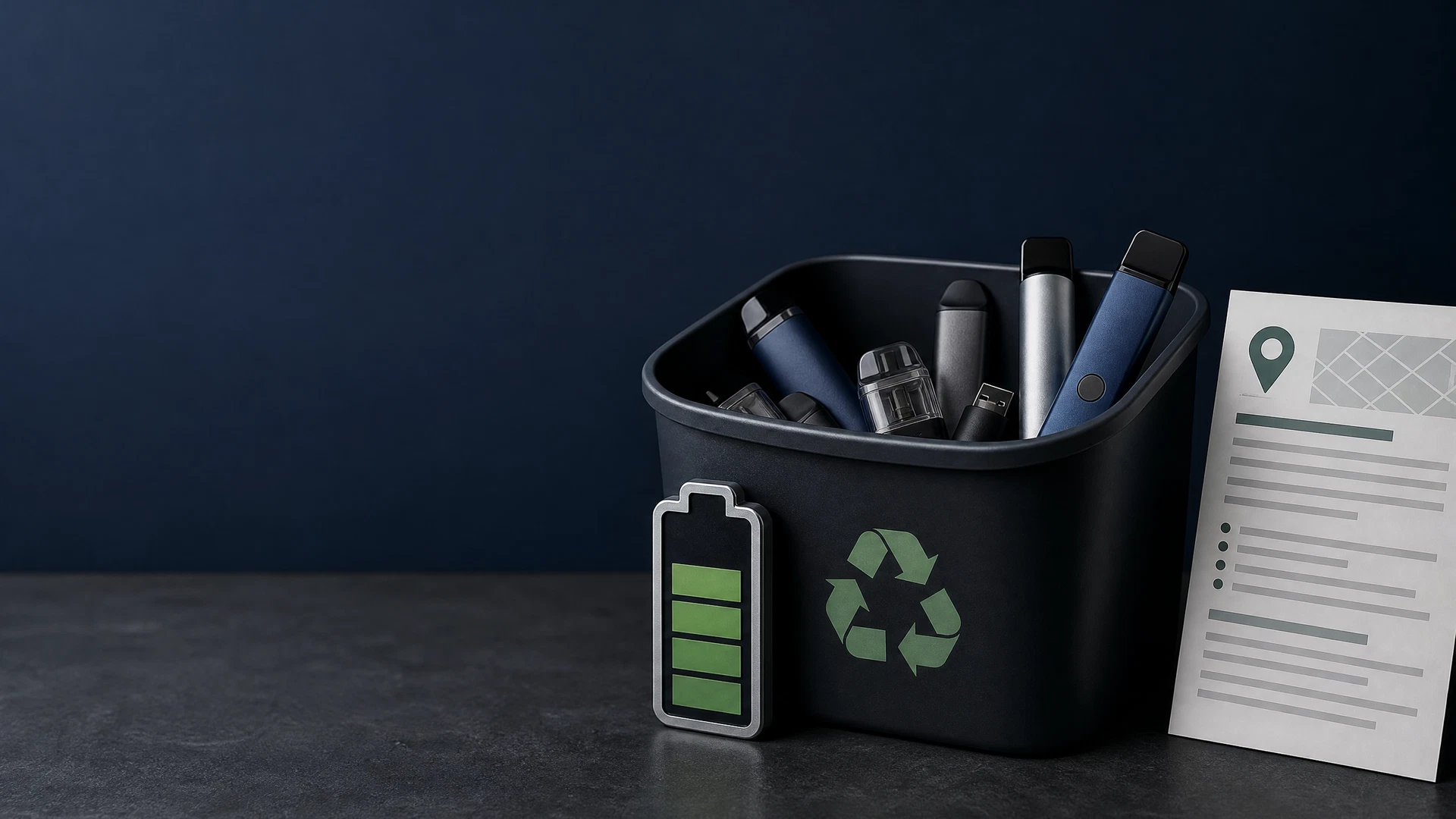
A focused, adult-oriented explainer on how to decide where to take used vape batteries in the U.S. in 2026. Covers why separate collection is recommended, practical decision steps, and how to find local options.
## Why this matters now The phrase vape battery recycling point guide is increasingly relevant in 2026 as more reusable and disposable e‑cigarette devices contain lithium cells and nicotine-containing components. The U.S. EPA notes that e‑cigarettes contain nicotine and lithium batteries and directs people to household hazardous waste (HHW) collection sites and other local options. This article is U.S. household information only — check municipal or state guidance for local rules. This is informational, not legal advice.
## Quick decision checklist (for adults only) - Identify the item: Is it a disposable e‑cigarette, a pod/mod system, or loose lithium cells? If the device has an identifiable lithium battery, treat it differently than ordinary trash. - Do not puncture or dismantle devices. Do not offer devices to minors or attempt repairs beyond removing pods as intended by the manufacturer. - Find a route: Contact your local HHW program, solid waste authority, or licensed recycling center to confirm acceptance and drop‑off hours. - If a retailer take‑back program exists, confirm whether they accept batteries or whole devices before visiting. - Prepare for transport: Tape exposed terminals and keep batteries isolated from metal objects to reduce the chance of short circuits in transit.
## Where to bring used vape batteries EPA guidance emphasizes HHW collection sites and local options. Many municipalities run specialized battery or e‑waste events; others partner with retail take‑back programs. Local collection rules differ — some accept intact devices only, others accept separated batteries or require appointment-based drop‑offs.
## Practical decision points 1) If you find an isolated battery (loose cell): prioritize a household hazardous waste or battery recycling program over curbside trash. 2) If the device is disposable and sealed: follow local HHW or retailer instructions; some programs accept sealed disposables as e‑waste. 3) If uncertain: contact your city or county waste authority with the device description and ask for the recommended route.
## What to avoid and why Avoid throwing lithium batteries or nicotine-containing devices in regular trash or recycling bins without local permission. Do not dismantle, puncture, or attempt to modify batteries — instead, use established collection routes. This guidance does not guarantee outcomes and is not a substitute for local regulations.
Further reading https://www.epa.gov/hw/how-safely-dispose-e-cigarettes-information-individuals