Vape catalogue evidence folder: 2026 retail guidance
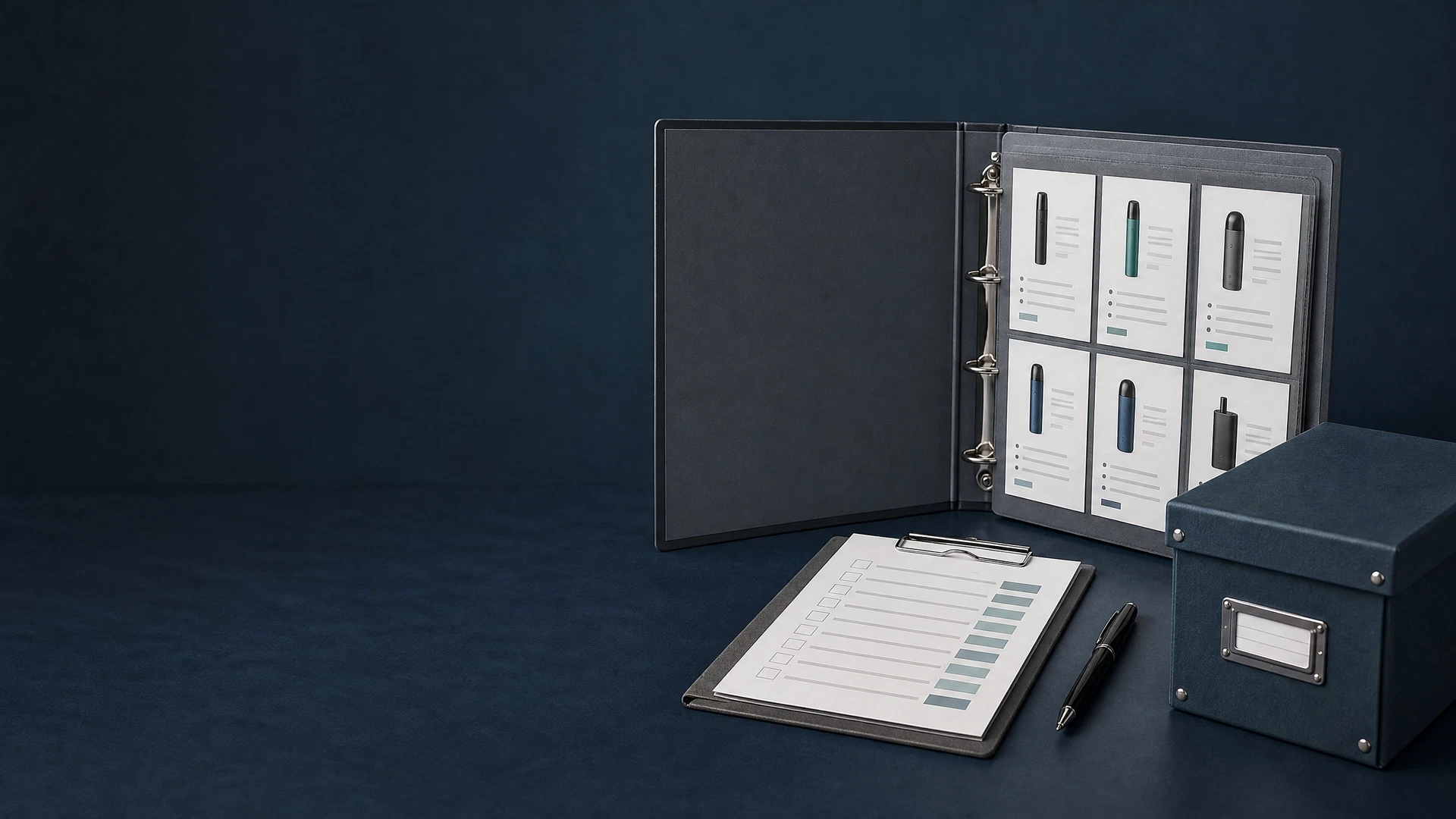
A UK-focused explainer for retailers preparing a vape catalogue evidence folder in 2026. Practical decision points, checklists and jurisdiction limits.
## What is a vape catalogue evidence folder? A vape catalogue evidence folder is a structured collection of documents and notes that a retailer can use to show how products were classified and managed. In the UK context in 2026, retailers increasingly use such a folder to record decisions about whether items are single-use, rechargeable, refillable or include replaceable components. The term "vape catalogue evidence folder" appears here to describe an organisational tool, not a legal guarantee.
## Why keep one (practical reasons) - Consolidates supplier information, invoices and product specifications in one place. - Records decisions on product classification linked to GOV.UK definitions (see source below). - Captures age-verification and staff training logs relevant to retail practice.
## Decision checklist (concrete steps) 1. Identify the product type: check supplier documentation for rechargeability, refillability or replaceable parts. Do not rely on packaging descriptions alone. 2. Attach invoices and supplier declarations that describe the product’s intended design features. 3. Note the date and person who made the classification decision and why (short rationale). 4. Keep age-verification policy records and staff training acknowledgements in the folder. 5. Log any customer complaints or safety notices relevant to a product line.
## How to use the folder day-to-day Store paper or digital records where staff can access them during compliance checks. Use versioning (date-stamped PDFs or dated hard copies). Review the folder at set intervals (for example quarterly) and after any change in supplier or product specification.
## Regulatory boundary and caution This article limits discussion to the UK. GOV.UK guidance distinguishes rechargeable, refillable and replaceable characteristics; those UK definitions should not be generalized to other markets. This is informational only and not legal advice. Do not interpret the presence of documents in a folder as proof of compliance; seek qualified legal advice for specific regulatory questions.