How Retailers Can Plan a Vape Collection Program in 2026
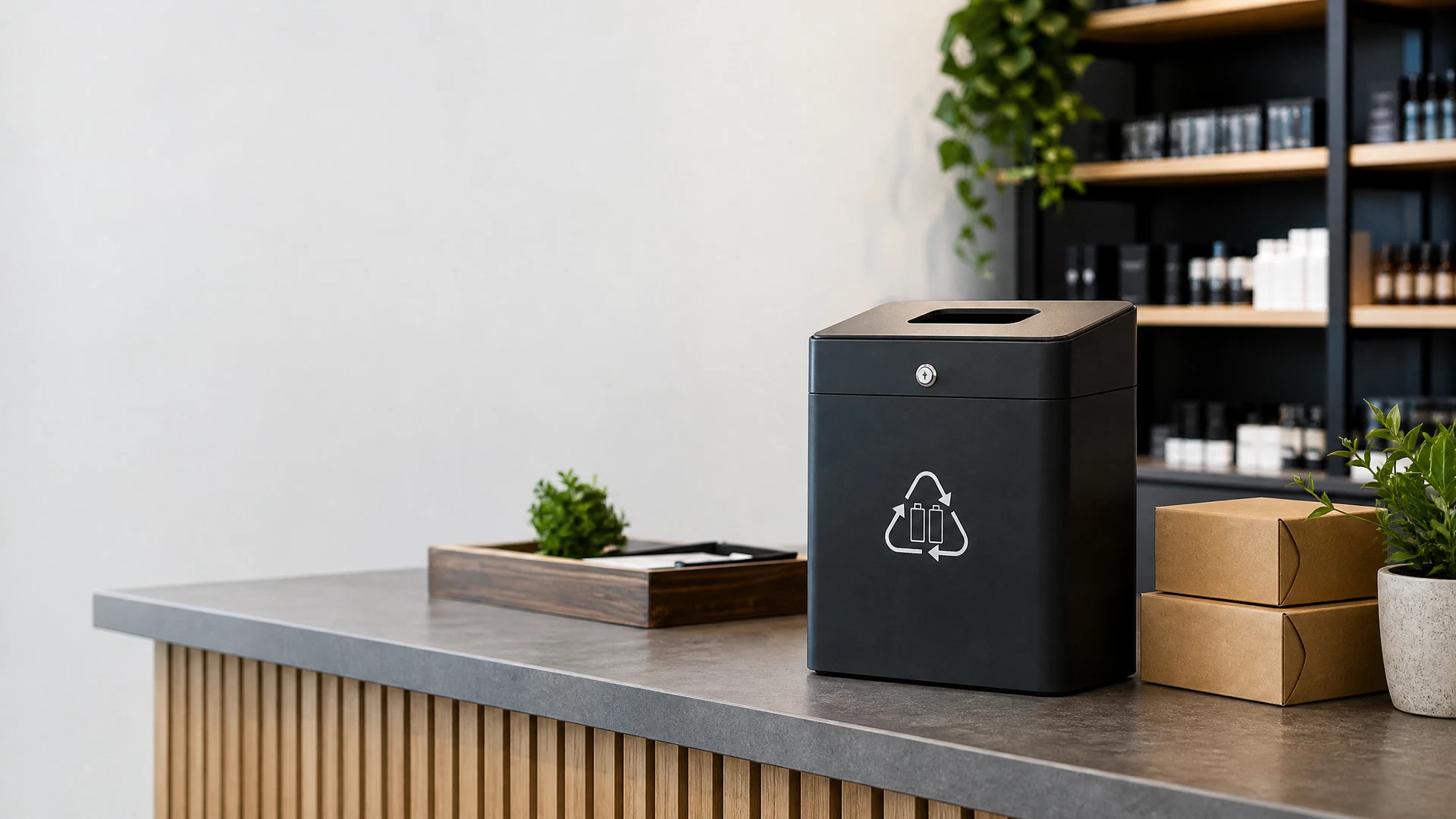
A vape collection program is an operational decision, not a marketing add-on. Here is a practical way for adult-market retailers to plan local partners, storage and customer communication.
A vape collection program can sound straightforward: place a box near the counter, invite customers to return used devices and arrange disposal later. In practice, the useful work happens before any box is put on the shop floor. Used e-cigarettes can contain nicotine liquid and lithium batteries, and the U.S. EPA notes that local and state requirements can differ. For an adult-market retailer, the first question is not how to promote a take-back point. It is whether the business has a safe, documented route from collection to an appropriate local partner.
Start with a clear scope
Define what the programme will and will not accept. A retailer might plan for whole used devices from household customers, but not loose liquid, damaged batteries, commercial waste or devices that have been opened. The scope should be easy for staff to explain and easy for customers to read. It also helps the business estimate likely volume, storage needs and collection frequency. A vague promise to take back everything creates uncertainty at the very moment a customer arrives with an unfamiliar product.
Check the local route before launch
The next step is to contact the local household hazardous-waste authority, an approved collection facility or a qualified waste partner. Ask whether the facility accepts e-cigarettes, whether an alternative collection site is permitted, how handover should work and what records the retailer should retain. In the United States, EPA guidance describes coordination with a household hazardous-waste facility or a qualified transporter as planning options. Elsewhere, the rules, terminology and available partners may be different. A responsible article or shop notice should say that plainly rather than presenting one country’s process as a global rule.
Keep collected devices separate from business waste
A return point needs a basic chain of custody. Staff should know which container is for devices returned by household customers, who can access it, where it is stored and when it is collected. This is especially important for retailers that also generate their own damaged stock or other business waste. The EPA explains that mixing categories of waste can change how it must be managed in the United States. Even where that specific rule does not apply, separate, labelled flows make it easier to explain what happened to an item and to identify a problem early.
Design for safe handling, not speed
The safest collection process is usually a simple one. Train staff not to dismantle a device or remove a battery unless the design and local process explicitly allow it. Keep returned items away from heat, crushing pressure and ordinary rubbish. Establish a clear escalation step for leaking, swollen, hot or visibly damaged devices rather than asking a frontline employee to improvise. The exact storage method should come from the local authority, waste partner and device instructions, but the underlying principle is stable: an uncertain item should be handled cautiously and routed to someone equipped to manage it.
Give customers precise instructions
Customer communication should be practical rather than promotional. A short sign can state who may use the collection point, which items are accepted, that devices should be returned intact and that local availability may change. If the shop cannot accept a device, staff should be able to point customers to the relevant municipal or household hazardous-waste resource. This protects the customer experience and prevents a collection programme from becoming an unplanned storage area.
Review the programme after the first cycle
After the first collection period, review the actual volume, staff questions, rejected items, storage space and partner feedback. A vape collection program is more reliable when it is adjusted from real operating information instead of assumed demand. The 2026 trend is not simply that retailers talk more about recycling. It is that responsible operators treat battery-containing devices as an end-of-life process with local partners, staff procedures and transparent limits.
Further reading: U.S. EPA, Safely Collecting and Managing E-Cigarettes from Households: https://www.epa.gov/electronics-batteries-management/battery-collection-tip-sheet-safely-collecting-and-managing-e