Vape End-of-Life Planning: A Consumer Information Guide
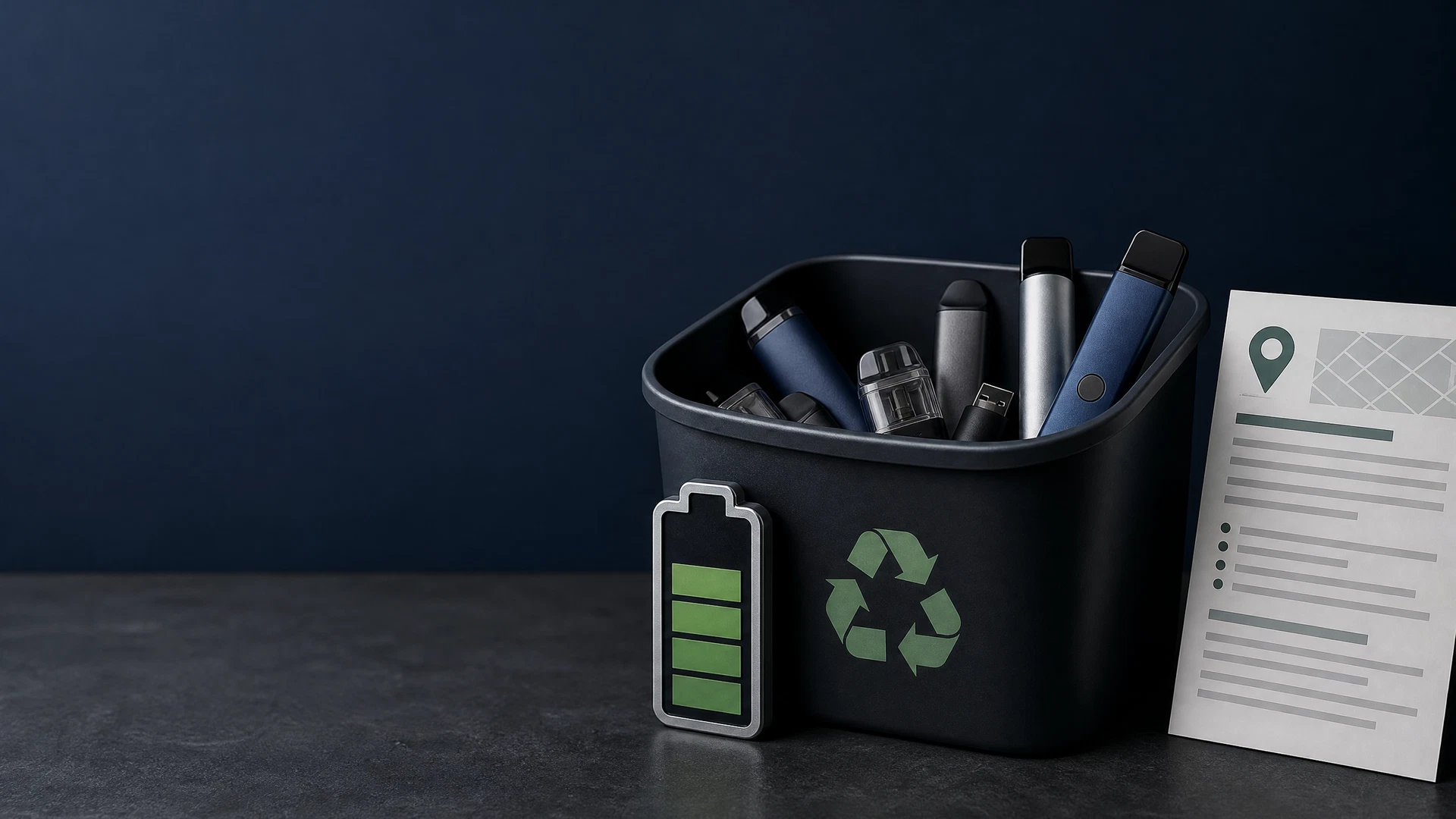
Clear, US household-focused guidance on vape end-of-life planning. Decision points, local options, and how to find household hazardous waste collection near you.
## Why plan for the end of a vape device? Vape end-of-life planning matters because most e-cigarette products contain two components that affect how they should be handled: nicotine-containing liquid and lithium batteries. These materials can present environmental concerns if discarded with regular household trash. This guide gives adult consumers in the United States practical decision points and next steps; it does not provide legal advice or medical guidance.
## Quick decision checklist - Is the device single-use/disposable or rechargeable? If disposable, treat it as an electronic product that may contain a sealed battery and nicotine residue. If rechargeable, it contains a lithium battery that requires special handling. - Is there visible leaking or damage? If yes, avoid handling the device extensively and seek local hazardous-waste instructions. - Do manufacturers, retailers, or local programs offer take-back or collection? Check before disposal—local options differ.
## Practical disposal options (US households) 1. Household hazardous waste (HHW) collection: The U.S. EPA recommends taking e-cigarettes to HHW collection sites when available. These programs accept items like lithium batteries and materials contaminated with nicotine. Availability varies by locality. 2. Manufacturer or retailer take-back: Some manufacturers or retail stores participate in voluntary collection programs. Confirm with the company or store; don’t assume universal availability. 3. Local recycling programs: Some municipalities accept batteries or electronics through special drop-off events. Rules differ—call your local waste authority.
## How to choose among options - Priority 1: Use an official HHW collection or a recognized take-back program when one is available nearby. - Priority 2: If neither option exists in your area, contact your municipal solid waste or recycling authority for guidance. Do not place devices with lithium batteries in ordinary curbside recycling unless your local program explicitly permits it. - Always follow local rules. Local jurisdictions set collection rules; what’s accepted in one county or state may be rejected in another.
## Handling and safety reminders (consumer-level) Do not puncture, crush, dismantle, or intentionally modify devices. Avoid prolonged skin contact with e-liquid and keep devices away from children and pets. This information is practical guidance only—not medical or legal advice.
## Jurisdiction and source notes This article is U.S. household information only. Local ordinances and programs vary; contact your city, county, or state waste authority for binding rules. The guidance here is based on the U.S. EPA’s consumer directions about e-cigarettes and disposal; it should not be taken as legal advice or a health endorsement.
## Further reading https://www.epa.gov/hw/how-safely-dispose-e-cigarettes-information-individuals