vape household hazardous waste guide: Questions to Ask Locally
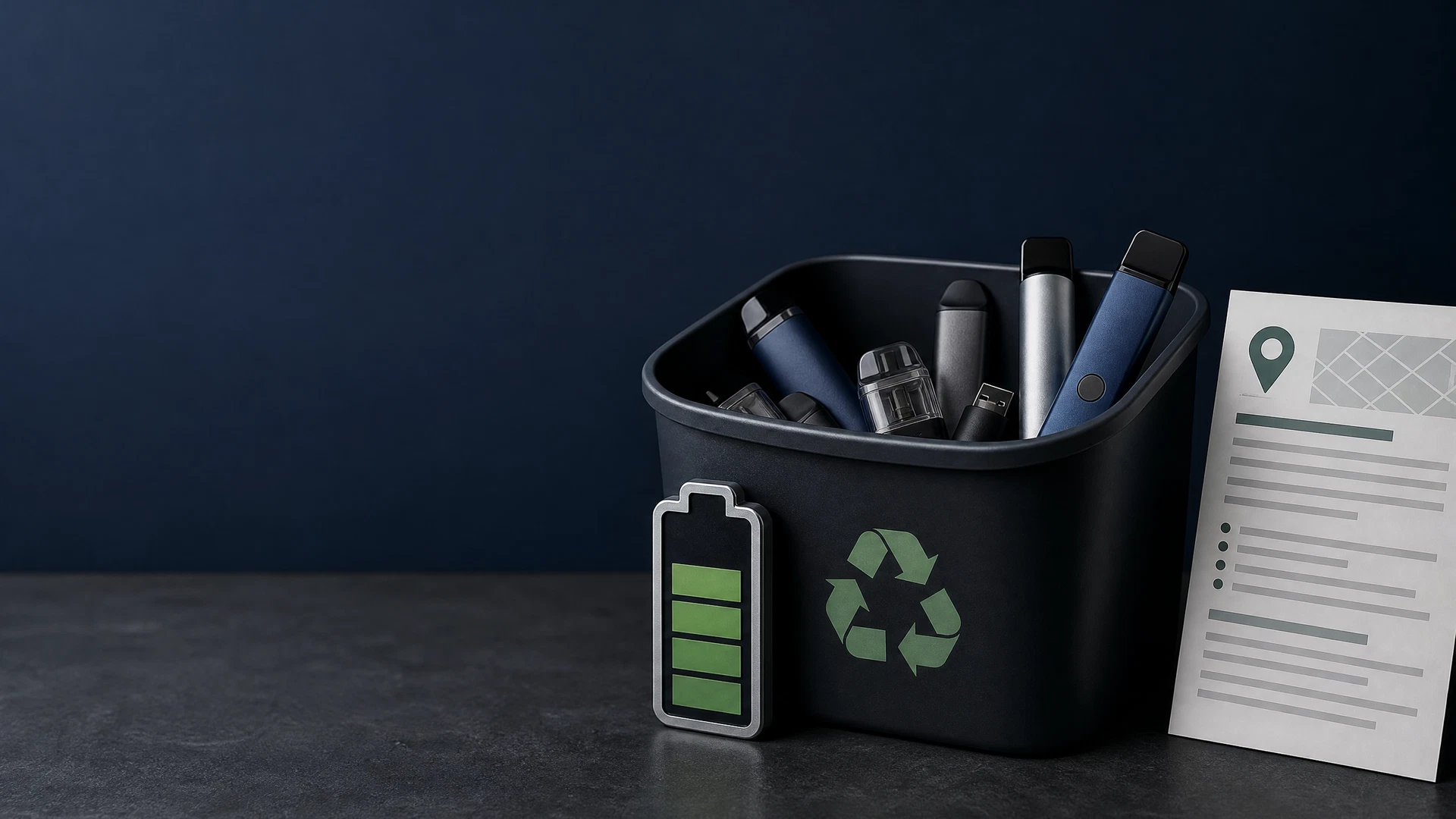
A practical, adult-focused 2026 guide for U.S. households on disposing e-cigarettes and cartridges. Includes decision checklists, local questions, and EPA guidance reference.
## What this guide covers This vape household hazardous waste guide explains practical questions U.S. households should ask when deciding how to dispose of e-cigarettes, cartridges, pods, and related components in 2026. It uses EPA guidance as its primary source and is intended for adults. This is not legal advice; local rules vary.
## Key facts from the EPA - E-cigarettes contain nicotine and lithium batteries, according to the EPA. - The EPA directs people to household hazardous waste (HHW) collection sites and local options for disposal. - Local collection rules differ; confirm with local authorities before discarding devices.
## Decision checkpoints (quick checklist) 1) Identify device type: disposable vs. rechargeable. Disposable single-use vapes generally contain nicotine and internal batteries—treat them as hazardous waste unless your local guidance says otherwise. 2) Battery presence: if the device has a removable lithium battery, follow battery-specific handling and drop-off rules. Don’t attempt to remove batteries if you are unsure. 3) Condition: intact and sealed cartridges vs. leaking or damaged devices. Leaking items require immediate separation and secure containment for transport to an HHW site. 4) Retail take-back: ask local vape retailers whether they offer take-back or safe collection programs; policies vary by business and jurisdiction. 5) Scheduled HHW events: many municipalities run periodic collection events with specific rules and limits—confirm dates, accepted items, and appointment requirements.
## Practical handling steps (do not perform repairs or modifications) - Keep items in a cool, dry place, away from children and pets. Do not charge, dismantle, or puncture devices. - For devices with exposed battery terminals, cover terminals with non-conductive tape (e.g., electrical tape) before transport to reduce short-circuit risk. - Place leaking or damaged items in a sealed plastic bag and keep them upright.
## Questions to ask local authorities or programs - Do you accept e-cigarettes, cartridges, and pods at HHW sites or special collection events? - Are there appointment requirements, quantity limits, or packaging rules (e.g., tape battery terminals, double-bag leaking items)? - Do any nearby retailers participate in voluntary take-back programs? - Are lithium batteries separated from the device before drop-off, or is the whole device accepted? - Are there fees or identity requirements for household drop-off?
## Jurisdiction and legal notes This article provides U.S. household information only. Local rules differ; consult your municipal waste authority, county HHW program, or state environmental agency for binding requirements. The EPA source cited below is informational and not legal advice.
## Final decision flow (simple) If unsure: do not throw in household trash. Contact local HHW collection or your waste authority. If you must store the device, keep it secure, tape exposed terminals, and avoid heat until disposal.
## Further reading https://www.epa.gov/hw/how-safely-dispose-e-cigarettes-information-individuals