Vape lithium battery disposal basics: Do not guess
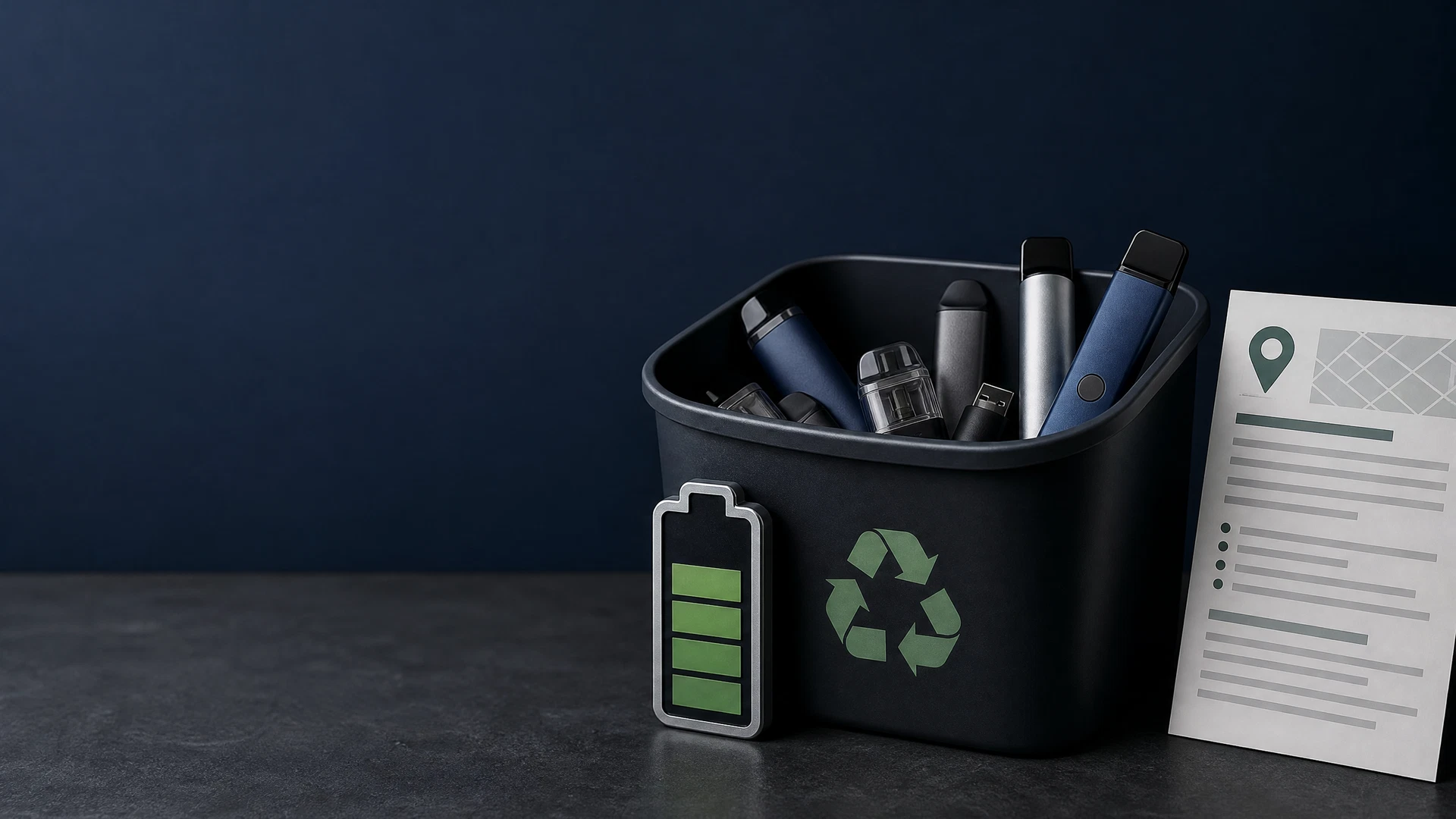
Clear, adult-focused steps for handling e-cigarettes and lithium batteries in the U.S. Understand collection options, decision points, and why you should consult local authorities.
What this short guide covers This article explains vape lithium battery disposal basics for adults in the United States. It summarizes public guidance and provides concrete decision points for end users. The U.S. EPA states that e-cigarettes contain nicotine and lithium batteries and directs people to household hazardous waste (HHW) collection sites and local options. Local collection rules differ; treat this as U.S. household information only and not legal advice.
Core facts to start from - E-cigarettes commonly contain lithium batteries and nicotine (U.S. EPA). - The EPA directs individuals to HHW programs and local collection options; there is no single national disposal rule. - Local programs differ in what they accept and how they want items prepared.
Quick decision checklist (adult readers) 1) Identify if your device is intended as disposable or rechargeable without opening it (check packaging or manufacturer instructions). If unclear, treat it as a device containing a lithium battery and nicotine. Do not dismantle the device to inspect internal cells. 2) Ask the retailer: some vape shops or battery retailers accept trade-ins or battery returns — confirm acceptance and any preparation steps they require. 3) Contact your city or county HHW program or local waste authority for instructions. Many jurisdictions offer drop‑off events or ongoing collection. 4) If a program accepts loose lithium batteries, check whether they require non‑conductive tape over terminals or other packaging — follow the local rule exactly. 5) Avoid placing e-cigarettes or loose lithium batteries in curbside trash or recycling unless your local authority explicitly permits it.
Practical notes and safety-minded limits - Do not market to or involve minors in disposal; this guidance is for adults. Do not give medical advice. - Do not attempt to modify or dismantle batteries or devices; improper handling can increase risk of thermal events. If a device is damaged, tell the collection program when you drop it off. - Because local requirements vary, the most reliable next step is to contact your local HHW program, municipal waste office, or the retailer for specific instructions.
Jurisdiction and legal clarity This article provides household-level information for the United States only. It is not legal advice. Local regulations and collection options differ; always check with local authorities before disposal.
Further reading: https://www.epa.gov/hw/how-safely-dispose-e-cigarettes-information-individuals