Vape recycling myths and facts: official household guidance (US)
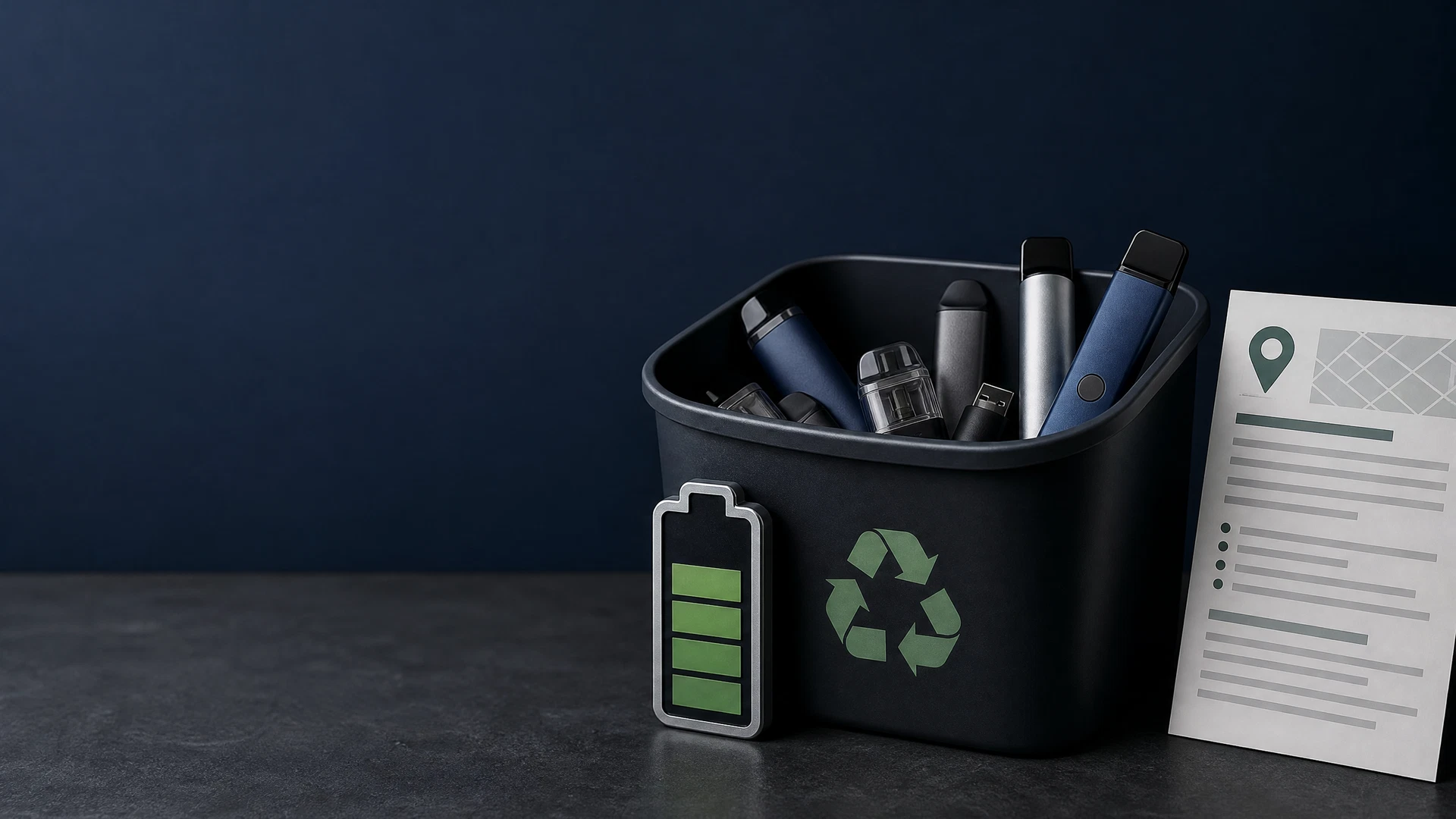
An evidence-led, adult-only guide to common vape recycling myths and facts. Explains EPA points — devices contain nicotine and lithium batteries — and offers clear decision steps for U.S. households. Not legal advice.
Vape recycling myths and facts: what official guidance says
This article summarizes key vape recycling myths and facts for adult U.S. household readers and gives practical decision points. The U.S. EPA notes that e-cigarettes and similar devices contain nicotine and lithium batteries, and it directs people to household hazardous waste (HHW) programs and local collection options. Local rules differ; this is U.S. household information only and not legal advice.
Core facts from the EPA
- E-cigarettes typically contain nicotine and lithium batteries (EPA statement). These components affect disposal options. - The EPA directs residents to household hazardous waste collection sites and local programs rather than curbside trash in many areas. - Collection rules and available programs can vary by municipality and state.
Common myths — and a plain-language reality check
Myth: "You can toss any vape in regular trash." Reality: Some localities treat devices as HHW due to batteries and nicotine. Check local rules.
Myth: "All retailers must accept used devices." Reality: Retailer take-back is available in some places but is not federally mandated; availability varies.
Myth: "Recycling centers accept vapes like empty cans." Reality: Most standard recycling streams do not accept devices with batteries and liquid residue.
Decision checklist for U.S. households
1. Identify the device type: disposable, rechargeable with integrated battery, or modular (external battery). Do not open or tamper with batteries. 2. If the device has a removable battery, follow local battery collection guidance; otherwise, treat the whole device as HHW until local instructions say otherwise. 3. Look up your municipality or county HHW program (search terms: “household hazardous waste” + your city/county). If offered, use scheduled HHW drop-off days. 4. Ask local retailers whether they offer take-back programs; confirm any acceptance rules before dropping off. 5. When in doubt, contact your local waste authority—rules differ—and follow their direction.
Practical cautions and jurisdiction limits
Do not disassemble devices to remove batteries or liquids. This summary is limited to U.S. household disposal options and does not substitute for legal advice. It does not provide medical guidance or claims about product safety or suitability.
Further reading
https://www.epa.gov/hw/how-safely-dispose-e-cigarettes-information-individuals