Vape Waste and WEEE: What Retailers Should Plan For
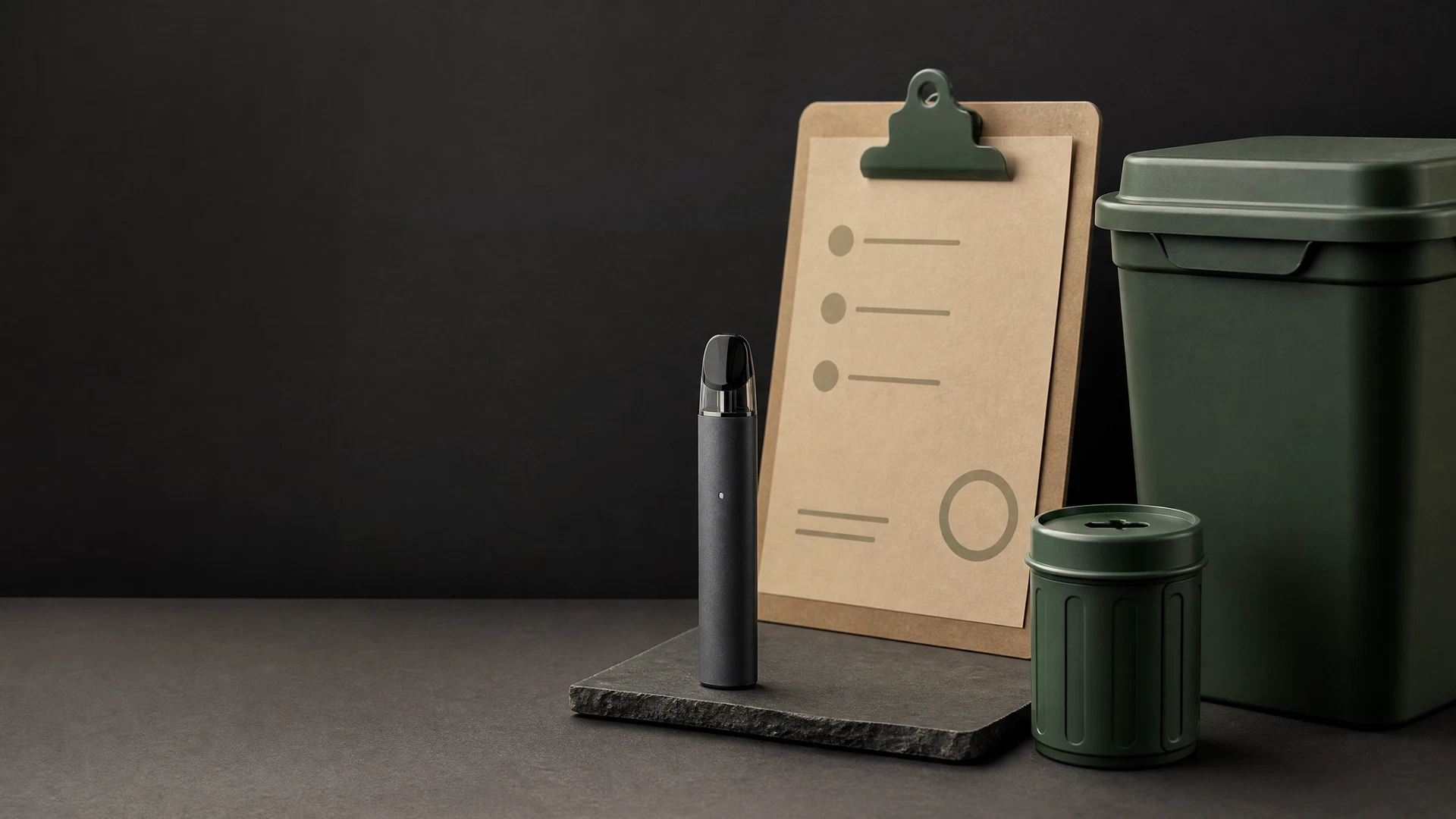
Vape recycling is not just a consumer reminder. For retailers, it is an operations question involving collection, storage, supplier coordination and local rules.
When a retailer adds vaping products to a catalogue, the operational question does not end at the point of sale. Devices and parts eventually become electronic waste, and that can create obligations around collection, storage and return. In markets with WEEE-style rules, the precise duties vary, but a reactive approach is rarely a good one.
Map the products that can come back
Start by listing what your business sells and what customers may return: complete devices, pods, coils, batteries, chargers and unsold stock. Do not assume every item can follow the same route. The collection partner should confirm which categories it accepts and how they must be packaged or stored. A simple internal record can prevent staff from placing different materials in an unsuitable container.
Make take-back practical, not merely visible
A sign alone does not make a return programme workable. Adult customers and staff need a clear answer to basic questions: Where is the collection point? Which items are accepted? What happens if a device is damaged? Who arranges collection? In the UK, official guidance states that vape distributors must offer a take-back service for returned vapes and parts. Other jurisdictions use different systems, so check the rules that apply to your business.
Protect the collection area
Used devices should be kept away from heat, moisture, crushing and unauthorised access. Do not encourage customers to dismantle products at the counter. If a device is leaking, visibly damaged or swollen, use the instructions provided by the collection partner or local authority rather than treating it like normal stock. A collection area is part of a safety process, not a decorative sustainability feature.
Coordinate with suppliers and service partners
Ask suppliers whether they provide documentation, return pathways or product-specific disposal information. Confirm the credentials and scope of any waste contractor. A business should be able to explain where collected material goes without making vague environmental claims that cannot be supported.
Review regularly
Waste rules, product formats and collection arrangements change. Assign responsibility for reviewing the programme, updating staff instructions and checking that public messaging remains accurate. A simple quarterly review is often more useful than a large policy document that no one revisits.
Further reading: GOV.UK, “Single-use vapes ban: information for businesses.”